Mobile cloud storage is a form of cloud storage that is accessible on mobile devices such as laptops, tablets, and smartphones. Mobile cloud storage providers offer services that allow the user to create and organize files, folders, music, and photos, similar to other cloud computing models. Services are used by both individuals and companies. Most cloud file storage providers offer limited free use but charge for additional storage once the free limit is exceeded. These costs are usually charged as a monthly subscription rate and have different rates depending on the amount of storage desired. In 2018, cloud services revenue was about $182.4 billion and in 2022 it is projected to grow to $331.2 billion. The cloud storage industry was projected to grow 17.2 percent in 2019 (Costello, 2019). == History == The concept of cloud computing trace back to 1960s, when the groundwork for modern internet and network technologies was being laid (Human for humans, 2024). One of the pivotal figures in this early period was J.C.R. Licklider, a visionary computer scientist who worked on ARPANET, the precursor to the internet. Licklider's ideas set the stage for the development of distributed computing systems, which are fundamental to cloud computing. Moving into the 1990s, AT&T introduced PersonaLink Services, a more advanced online platform offering electronic mail and online storage. Major turning point in 2006 The launch of Amazon Web Services (AWS) in 2006 marked a major turning point. AWS introduced Amazon S3 (Simple Storage Service), which allowed businesses and developers to store and retrieve any amount of data, at any time, from anywhere on the web. This development was revolutionary, providing scalable, reliable, and low-cost data storage infrastructure that transformed how organizations managed their data. == Applications == Some mobile device manufacturers include mobile cloud storage apps with their product. These apps facilitate synchronization of user files across multiple platforms. Part of the process for setting up new mobile devices frequently includes configuring a cloud storage service to Backup the device's files and information. Apple iOS devices come pre-loaded and configured to use Apple's mobile cloud storage service iCloud. Google offers a similar feature with the Android operating system by backing up the device using a Google Drive account. The Samsung Galaxy smartphone has partnered with Dropbox, while Microsoft similarly offers Microsoft OneDrive. Some mobile cloud storage apps are platform-independent. For example, Nasuni's Mobile Access app is available on any Android or iOS device. Most companies offering Cloud Storage have secure website to access files allowing use on any device that can browse the Internet.
Cyborg
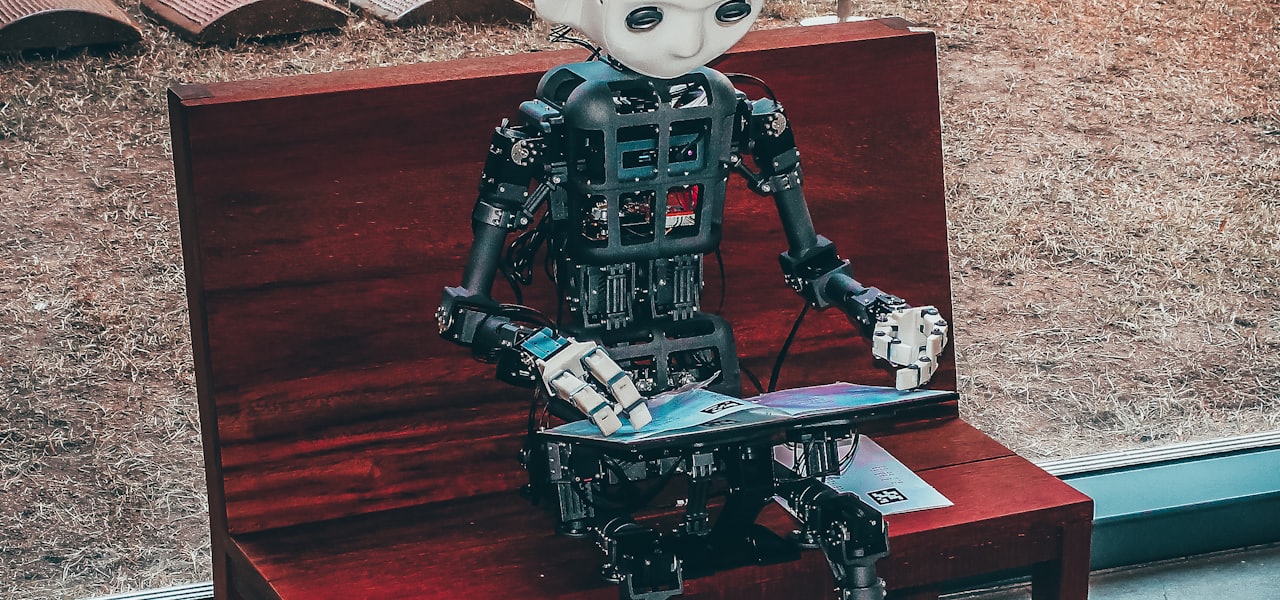
A cyborg () is a being with both organic and biomechatronic body parts. It is a portmanteau of cybernetic and organism. The term was coined in 1960 by Manfred Clynes and Nathan S. Kline. In contrast to biorobots and androids, the term cyborg applies to a living organism that has undergone restoration of function or enhancements of abilities due to the integration of some artificial component or technology that relies on feedback. == Description and definition == Alternative names for a cyborg include cybernetic organism, cyber-organism, cyber-organic being, cybernetically enhanced organism, cybernetically augmented organism, technorganic being, techno-organic being, and techno-organism. Unlike bionics, biorobotics, or androids, a cyborg is an organism that has restored function or, especially, enhanced abilities due to the integration of some artificial component or technology that relies on some sort of feedback, for example: prostheses, artificial organs, implants or, in some cases, wearable technology. Cyborg technologies may enable or support collective intelligence. A related idea is the "augmented human". While cyborgs are commonly thought of as mammals, including humans, the term can apply to any organism. === Placement and distinctions === D. S. Halacy's Cyborg: Evolution of the Superman (1965) featured an introduction which spoke of a "new frontier" that was "not merely space, but more profoundly the relationship between 'inner space' to 'outer space' – a bridge...between mind and matter." In "A Cyborg Manifesto", Donna Haraway rejects the notion of rigid boundaries between humanity and technology, arguing that, as humans depend on more technology over time, humanity and technology have become too interwoven to draw lines between them. She believes that since we have allowed and created machines and technology to be so advanced, there should be no reason to fear what we have created, and cyborgs should be embraced because they are part of human identities. However, Haraway has also expressed concern over the contradictions of scientific objectivity and the ethics of technological evolution, and has argued that "There are political consequences to scientific accounts of the world." === Biosocial definition === According to some definitions of the term, the physical attachments that humans have with even the most basic technologies have already made them cyborgs. In a typical example, a human with an artificial cardiac pacemaker or implantable cardioverter-defibrillator would be considered a cyborg, since these devices measure voltage potentials in the body, perform signal processing, and can deliver electrical stimuli, using a synthetic feedback mechanism to keep that person alive. Implants, especially cochlear implants, that combine mechanical modification with any kind of feedback response are also cybernetic enhancements. Some theorists cite such modifications as contact lenses, hearing aids, smartphones, or intraocular lenses as examples of fitting humans with technology to enhance their biological capabilities. The emerging trend of implanting microchips inside the body (mainly the hands), to make financial operations like a contactless payment, or basic tasks like opening a door, has been erroneously marketed as more recent examples of cybernetic enhancement. The latter has not yet seen significant traction outside niche areas in Scandinavia and in actual function is little more than a pre-programmed Radio-frequency identification (RFID) microchip encased in glass that does not interact with the human body (it is the same technology used in the microchips injected into animals for ease of identification), thus not fitting the definition of a cybernetic implant. As cyborgs currently are on the rise, some theorists argue there is a need to develop new definitions of aging. For instance, a bio-techno-social definition of aging has been suggested. The term is also used to address human-technology mixtures in the abstract. This includes not only commonly used pieces of technology such as phones, computers, the Internet, and so on, but also artifacts that are not usually considered technology; for example, pen and paper, and speech and language. When augmented with these technologies and connected in communication with people in other times and places, a person becomes capable of more than they were before. An example is a computer, which gains power by using Internet protocols to connect with other computers. Another example is a social-media bot—either a bot-assisted human or a human-assisted-bot—used to target social media with likes and shares. Cybernetic technologies thus include highways, pipes, electrical wiring, buildings, electrical plants, libraries, and other infrastructural constructs. Bruce Sterling, in his Shaper/Mechanist universe, suggested an idea of an alternative cyborg called 'Lobster', which is made not by using internal implants, but by using an external shell (e.g. a powered exoskeleton). The computer game Deus Ex: Invisible War prominently features cyborgs called Omar, Russian for 'lobster'. === Evolutionary perspective === In 1994, Hans Hass formulated a scientific view of the human-machine hybrids he called "hypercells". They can expand their biological cell body with artificial artifacts and thus expand their performance body. The theory of hypercells or Homo proteus, as Hass called the human-machine hybrid to distinguish Homo sapiens, extends Charles Darwin's theory of evolution and deals with the course of evolution beyond humans. In his 2019 book Novacene, James Lovelock used the term "cyborgs" to refer to the next generation of beings who will become the "understanders of the future" and "lead the cosmos to self-knowledge". While acknowledging the organic component in Clynes' and Kline's definition, he proposed that these cyborgs "will have designed and built themselves from the artificial intelligence systems we have already constructed", and used the term cyborg "to emphasize that the new intelligent beings will have arisen, like us, from Darwinian evolution." == Origins == The concept of a man-machine mixture was widespread in science fiction before World War II. As early as 1843, Edgar Allan Poe described a man with extensive prostheses in the short story "The Man That Was Used Up". In 1911, Jean de La Hire introduced the Nyctalope, a science fiction hero who was perhaps the first literary cyborg, in Le Mystère des XV (later translated as The Nyctalope on Mars). Nearly two decades later, Edmond Hamilton presented space explorers with a mixture of organic and machine parts in his 1928 novel The Comet Doom. He later featured the talking, living brain of an old scientist, Simon Wright, floating in a transparent case, and in all the adventures of his famous hero, Captain Future. In 1944, in the short story "No Woman Born", C. L. Moore wrote of Deirdre, a dancer, whose body was burned completely and whose brain was placed in a faceless but beautiful and supple mechanical body. In 1960, the term "cyborg" was coined by Manfred E. Clynes and Nathan S. Kline to refer to their conception of an enhanced human being who could survive in extraterrestrial environments: For the exogenously extended organizational complex functioning as an integrated homeostatic system unconsciously, we propose the term 'Cyborg'. Their concept was the outcome of thinking about the need for an intimate relationship between human and machine as the new frontier of space exploration was beginning to develop. A designer of physiological instrumentation and electronic data-processing systems, Clynes was the chief research scientist in the Dynamic Simulation Laboratory at Rockland State Hospital in New York. The term first appears in print 5 months earlier when The New York Times reported on the "Psychophysiological Aspects of Space Flight Symposium" where Clynes and Kline first presented their paper: A cyborg is essentially a man-machine system in which the control mechanisms of the human portion are modified externally by drugs or regulatory devices so that the being can live in an environment different from the normal one. Thereafter, Hamilton would first use the term "cyborg" explicitly in the 1962 short story, "After a Judgment Day", to describe the "mechanical analogs" called "Charlies," explaining that "[c]yborgs, they had been called from the first one in the 1960s...cybernetic organisms." The 1972 novel Cyborg by Martin Caidin introduced the character of bionic government agent Steve Austin, and was adapted into the popular television series The Six Million Dollar Man, which ran from 1973 to 1978. In 2001, a book titled Cyborg: Digital Destiny and Human Possibility in the Age of the Wearable computer was published by Doubleday. Some of the ideas in the book were incorporated into the documentary film Cyberman that same year. == Cyborg tissues in engineering == Cyborg tissues structured with carbon nanotubes and plan
Artificial intelligence in government
Artificial intelligence (AI) has a range of uses in government. It can be used to further public policy objectives (in areas such as emergency services, health and welfare), as well as assist the public to interact with the government (through the use of virtual assistants, for example). According to the Harvard Business Review, "Applications of artificial intelligence to the public sector are broad and growing, with early experiments taking place around the world." Hila Mehr from the Ash Center for Democratic Governance and Innovation at Harvard University notes that AI in government is not new, with postal services using machine methods in the late 1990s to recognise handwriting on envelopes to automatically route letters. The use of AI in government comes with significant benefits, including efficiencies resulting in cost savings (for instance by reducing the number of front office staff) and reducing the opportunities for corruption. However, it also carries risks (described below). == Uses of AI in government == The potential uses of AI in government are wide and varied, with Deloitte considering that "Cognitive technologies could eventually revolutionize every facet of government operations". Mehr suggests that six types of government problems are appropriate for AI applications: Resource allocation—such as where administrative support is required to complete tasks more quickly. Large datasets—where these are too large for employees to work efficiently and multiple datasets could be combined to provide greater insights. Expert shortage—including where basic questions could be answered and niche issues can be learned. Predictable scenario—historical data makes the situation predictable. Procedural tasks refer to repetitive tasks in which the answers to inputs or outputs are binary. Diverse data—where data takes various forms (such as visual and linguistic) and needs to be summarized regularly. Mehr states that "While applications of AI in government work have not kept pace with the rapid expansion of AI in the private sector, the potential use cases in the public sector mirror common applications in the private sector." Potential and actual uses of AI in government can be divided into three broad categories: those that contribute to public policy objectives, those that assist public interactions with the government, and other uses. === Contributing to public policy objectives === There are a range of examples of where AI can contribute to public policy objectives. These include: Receiving benefits at job loss, retirement, bereavement and child birth almost immediately, in an automated way (thus without requiring any actions from citizens at all) Social insurance service provision Classifying emergency calls based on their urgency (like the system used by the Cincinnati Fire Department in the United States) Detecting and preventing the spread of diseases Assisting public servants in making welfare payments and immigration decisions Adjudicating bail hearings Triaging health care cases Monitoring social media for public feedback on policies Monitoring social media to identify emergency situations Identifying fraudulent benefits claims Predicting a crime and recommending optimal police presence Predicting traffic congestion and car accidents Anticipating road maintenance requirements Identifying breaches of health regulations Providing personalised education to students Marking exam papers Assisting with defence and national security (see Artificial intelligence § Military and Applications of artificial intelligence § Other fields in which AI methods are implemented respectively) Artificial Intelligence in China has been used to drive both political and economic markets. In 2019, Shanghai’s government rolled out 100 billion yuan to assist in funding enterprises that used AI to introduce 22 new policy agendas. Shanghai invested in these enterprises to attract top international talent in order to set up the Shanghai Municipal Big Data Center. City Brain AI is an urban management platform made by Alibaba. China uses City Brain AI to maintain a significant share of capital investment through public and state owned enterprises. The synergy between public and private sectors are more than capital-driven with City Brain AI. The blend of both public and private shareholding is only made out to be through the role of provincial and sub-provincial governments. Both hold control over the direction that City Brain AI makes both socially and economically. === Assisting public interactions with government === AI can be used to assist members of the public to interact with government and access government services, for example by: Answering questions using virtual assistants or chatbots (see below) Directing requests to the appropriate area within government Filling out forms Assisting with searching documents (e.g. IP Australia's trade mark search) Scheduling appointments Various governments, including those of Australia and Estonia, have implemented virtual assistants to aid citizens in navigating services, with applications ranging from tax inquiries to life-event registrations. === Gerrymandering === Gerrymandering is a method of influencing political process by drawing map boundaries in favor of incumbent parties. Academic researchers Wendy Tam Cho and Bruce Cain have proposed partially automating the map-drawing process with an AI system to reduce partisan gerrymandering. Even with this AI system, the process may still be manipulated to favor partisan interests, so the researchers emphasized the importance of transparency and human involvement. === Other uses === Other uses of AI in government include: Translation Language interpretation pioneered by the European Commission's Directorate General for Interpretation and Florika Fink-Hooijer. Drafting documents == Potential benefits == AI offers potential efficiencies and cost savings for the government. For example, Deloitte has estimated that automation could save US Government employees between 96.7 million to 1.2 billion hours a year, resulting in potential savings of between $3.3 billion to $41.1 billion a year. The Harvard Business Review has stated that while this may lead a government to reduce employee numbers, "Governments could instead choose to invest in the quality of its services. They can re-employ workers' time towards more rewarding work that requires lateral thinking, empathy, and creativity—all things at which humans continue to outperform even the most sophisticated AI program." == Risks == Risks associated with the use of AI in government include AI becoming susceptible to bias, a lack of transparency in how an AI application may make decisions, and the accountability for any such decisions. For example, a 2026 lawsuit alleged that the U.S. Department of Government Efficiency used ChatGPT to flag and cancel federal humanities grants, including projects on Jewish history and Israeli culture, over some objections from NEH officials, illustrating how automated decision-making could affect funding outcomes.
Apple Intelligence
Apple Intelligence is a generative artificial intelligence system developed by Apple Inc. Relying on a combination of on-device and server processing, it was announced on June 10, 2024, at the 2024 Worldwide Developers Conference, as a built-in feature of Apple's iOS 18, iPadOS 18, and macOS Sequoia, which were announced alongside Apple Intelligence. Apple Intelligence is free for all users with supported devices. On macOS, Apple Intelligence is available only on Apple silicon Mac computers; Intel-based Mac computers are not supported. Features include writing tools that assist users with grammar and proofreading, image generation, summaries of system notifications, AI-assisted image retouching in the Photos app, and integration with ChatGPT, the popular chatbot by OpenAI. As of March 2026, Apple Intelligence is not available yet on devices purchased in mainland China or on any device using an Apple Account set to mainland China, even if the device was bought elsewhere. == History == === Background === Apple first implemented artificial intelligence features in its products with the release of Siri in the iPhone 4S in 2011. In the years after its release, Apple engaged in efforts to ensure its artificial intelligence operations remained covert; according to University of California, Berkeley professor Trevor Darrell, the company's secrecy deterred graduate students. The company started expanding its artificial intelligence team in 2015, opening up its operations by publishing more scientific papers and joining AI industry research groups. Apple reportedly acquired more AI companies from 2016 to 2020. In 2017, Apple released the iPhone 8 and the iPhone X with the A11 Bionic processor, which featured its first dedicated Neural Engine for accelerating common machine learning tasks. Despite its investments in artificial intelligence, Siri was criticized both by reviewers and internally at Apple for lagging behind other AI assistants. The rapid development of generative artificial intelligence and the release of ChatGPT in late 2022 reportedly blindsided Apple executives and forced the company to refocus its efforts on AI. In an interview with Good Morning America, Apple CEO Tim Cook stated that generative AI had "great promise" but had some potential dangers, and that it was "looking closely" at ChatGPT. It was first reported in July 2023 that Apple was creating its own internal large language model, codenamed "Ajax". In October 2023, Apple was reportedly on track to release new generative AI features into its operating systems by 2024, including a significantly redeveloped Siri. In an earnings call in February 2024, Cook stated that the company was spending a "tremendous amount of time and effort" into AI features that would be shared "later that year". === Google deal === In January 2026, Apple and Google announced a multi-year partnership under which Apple’s next-generation foundation models are expected to incorporate Google’s Gemini models and cloud infrastructure. According to the companies, the collaboration is intended to support future Apple Intelligence features, including enhancements to Siri, while Apple Intelligence will continue to operate on Apple devices and through Apple’s Private Cloud Compute system, which Apple states is designed to preserve user privacy. On an earnings call, Apple reported to investors that they were integrating an on-device model of the Google Gemini AI to Siri, as the development of their model was beset with setbacks. Apple has previously tested and used other third-party AI models like ChatGPT, but according to a Bloomberg article by Mark Gurman, Apple pushed forward the proposed Google deal; by using Google's Gemini model possessing 1.2 trillion parameters, Apple would integrate a much larger and more complex model than those it previously developed and used. Of note, comparable AI models from other major companies (including OpenAI and Meta) have also been reported to operate at a similar “trillion-parameter” scale and to compete against Gemini-class systems on benchmarks. == Models == Apple Intelligence consists of an on-device model as well as a cloud model running on servers primarily using Apple silicon. Both models consist of a generic foundation model, as well as multiple adapter models that are more specialized to particular tasks like text summarization and tone adjustment. It was launched for developers and testers on July 29, 2024, in U.S. English, with the developer betas of iOS 18.1, macOS 15.1, and iPadOS 18.1, released partially on October 28, 2024, and will fully launch by 2026. According to a human evaluation done by Apple's machine learning division, the on-device foundation model beat or tied equivalent small models by Mistral AI, Microsoft, and Google, while the server foundation models beat the performance of OpenAI's GPT-3, while roughly matching the performance of GPT-4. Apple's cloud models are built on a Private Cloud Compute platform which is allegedly designed with user privacy and end-to-end encryption in mind. Unlike other generative AI services like ChatGPT which use servers from third parties, Apple Intelligence's cloud models are run entirely on Apple servers with custom Apple silicon hardware built for end-to-end encryption. It was also designed to make sure that the software running on said servers matches the independently verifiable software accessible to researchers. In case of a software mismatch, Apple devices will refuse to connect to the servers. On June 10, 2025, Apple announced that Apple's on-device foundation models will be available to third-party applications as part of the Foundation Models API, with support for structured data response and tool calling. == Features == === Writing tools === Apple Intelligence features writing tools that are powered by LLMs. Selected text can be proofread, rewritten, made more friendly, concise or professional, similar to the AI writing features of the popular online English-language writing assistant tool Grammarly. It can also be used to generate summaries, key points, tables, and lists from an article or piece of writing. In iOS 18.2 and macOS 15.2, a ChatGPT integration was added to Writing Tools through "Compose" and "Describe your change" features. === Real-time Translation === Apple Intelligence enables the real-time translation of messages, photos and videos, and phone calls, through Apple's hardware. For communicating with foreigners, using the Translate app on iPhone to show subtitles in their language or to play back the translated audio naturally in their language, and also by wearing AirPods with Live Translation can now help to understand what someone is saying in users' preferred language in conversation. If both have headphones, simultaneous interpretation can be achieved. === Image Playground === Apple Intelligence can be used to generate images on-device with the Image Playground app. Similarly to OpenAI's DALL-E, it can be used to generate images using AI, using phrases and descriptions to output an image with customizable styles such as Animation and Sketch. In Notes, users can access Image Playground on iPad through the Image Wand tool in the Apple Pencil palette without having to open the Image Playground app. Rough sketches made with Apple Pencil can be transformed into images. As part of iOS, iPadOS, and macOS 26, Image Playground now integrates with the image generation models built into ChatGPT. === Genmoji === Using Apple Intelligence text-to-image models, users can generate unique "Genmoji" images by typing descriptions (prompting). Users can pick people in photos to have Genmoji generate images that resemble them. Similarly to emoji, Genmoji can be added inline to text messages, tapbacks, stickers and can be shared in Messages as well in third-party applications as inline messages or as stickers. === Siri overhaul === Siri, which used to be Apple's virtual assistant, has been updated to be an LLM chatbot, with enhanced capabilities made possible by Apple Intelligence. The latest iteration features an updated user interface, improved natural language processing, and the option to interact via text by double tapping the home bar without enabling the feature in the Accessibility menu, or double-clicking the command key on macOS. In a later update, Apple Intelligence will add the ability for Siri to use personal context from device activities to answer queries. === Mail === Apple Intelligence adds a feature called Priority Messages to the Mail app, which shows urgent emails such as same-day invitations or boarding passes, with AI generated summaries of the email. The Mail app also gains the ability to categorize incoming mail into Primary, Transactions, Updates, and Promotions based on what the email contains, which Apple claims is done all on-device. === Photos === Apple's Photos app includes a feature to create custom memory movies and enhanced search capabilities. Users can describe
Birkhoff algorithm
Birkhoff's algorithm (also called Birkhoff-von-Neumann algorithm) is an algorithm for decomposing a bistochastic matrix into a convex combination of permutation matrices. It was published by Garrett Birkhoff in 1946. It has many applications. One such application is for the problem of fair random assignment: given a randomized allocation of items, Birkhoff's algorithm can decompose it into a lottery on deterministic allocations. == Terminology == A bistochastic matrix (also called: doubly-stochastic) is a matrix in which all elements are greater than or equal to 0 and the sum of the elements in each row and column equals 1. An example is the following 3-by-3 matrix: ( 0.2 0.3 0.5 0.6 0.2 0.2 0.2 0.5 0.3 ) {\displaystyle {\begin{pmatrix}0.2&0.3&0.5\\0.6&0.2&0.2\\0.2&0.5&0.3\end{pmatrix}}} A permutation matrix is a special case of a bistochastic matrix, in which each element is either 0 or 1 (so there is exactly one "1" in each row and each column). An example is the following 3-by-3 matrix: ( 0 1 0 0 0 1 1 0 0 ) {\displaystyle {\begin{pmatrix}0&1&0\\0&0&1\\1&0&0\end{pmatrix}}} A Birkhoff decomposition (also called: Birkhoff-von-Neumann decomposition) of a bistochastic matrix is a presentation of it as a sum of permutation matrices with non-negative weights. For example, the above matrix can be presented as the following sum: 0.2 ( 0 1 0 0 0 1 1 0 0 ) + 0.2 ( 1 0 0 0 1 0 0 0 1 ) + 0.1 ( 0 1 0 1 0 0 0 0 1 ) + 0.5 ( 0 0 1 1 0 0 0 1 0 ) {\displaystyle 0.2{\begin{pmatrix}0&1&0\\0&0&1\\1&0&0\end{pmatrix}}+0.2{\begin{pmatrix}1&0&0\\0&1&0\\0&0&1\end{pmatrix}}+0.1{\begin{pmatrix}0&1&0\\1&0&0\\0&0&1\end{pmatrix}}+0.5{\begin{pmatrix}0&0&1\\1&0&0\\0&1&0\end{pmatrix}}} Birkhoff's algorithm receives as input a bistochastic matrix and returns as output a Birkhoff decomposition. == Tools == A permutation set of an n-by-n matrix X is a set of n entries of X containing exactly one entry from each row and from each column. A theorem by Dénes Kőnig says that: Every bistochastic matrix has a permutation-set in which all entries are positive.The positivity graph of an n-by-n matrix X is a bipartite graph with 2n vertices, in which the vertices on one side are n rows and the vertices on the other side are the n columns, and there is an edge between a row and a column if the entry at that row and column is positive. A permutation set with positive entries is equivalent to a perfect matching in the positivity graph. A perfect matching in a bipartite graph can be found in polynomial time, e.g. using any algorithm for maximum cardinality matching. Kőnig's theorem is equivalent to the following:The positivity graph of any bistochastic matrix admits a perfect matching.A matrix is called scaled-bistochastic if all elements are non-negative, and the sum of each row and column equals c, where c is some positive constant. In other words, it is c times a bistochastic matrix. Since the positivity graph is not affected by scaling:The positivity graph of any scaled-bistochastic matrix admits a perfect matching. == Algorithm == Birkhoff's algorithm is a greedy algorithm: it greedily finds perfect matchings and removes them from the fractional matching. It works as follows. Let i = 1. Construct the positivity graph GX of X. Find a perfect matching in GX, corresponding to a positive permutation set in X. Let z[i] > 0 be the smallest entry in the permutation set. Let P[i] be a permutation matrix with 1 in the positive permutation set. Let X := X − z[i] P[i]. If X contains nonzero elements, Let i = i + 1 and go back to step 2. Otherwise, return the sum: z[1] P[1] + ... + z[2] P[2] + ... + z[i] P[i]. The algorithm is correct because, after step 6, the sum in each row and each column drops by z[i]. Therefore, the matrix X remains scaled-bistochastic. Therefore, in step 3, a perfect matching always exists. == Run-time complexity == By the selection of z[i] in step 4, in each iteration at least one element of X becomes 0. Therefore, the algorithm must end after at most n2 steps. However, the last step must simultaneously make n elements 0, so the algorithm ends after at most n2 − n + 1 steps, which implies O ( n 2 ) {\displaystyle O(n^{2})} . In 1960, Joshnson, Dulmage and Mendelsohn showed that Birkhoff's algorithm actually ends after at most n2 − 2n + 2 steps, which is tight in general (that is, in some cases n2 − 2n + 2 permutation matrices may be required). == Application in fair division == In the fair random assignment problem, there are n objects and n people with different preferences over the objects. It is required to give an object to each person. To attain fairness, the allocation is randomized: for each (person, object) pair, a probability is calculated, such that the sum of probabilities for each person and for each object is 1. The probabilistic-serial procedure can compute the probabilities such that each agent, looking at the matrix of probabilities, prefers his row of probabilities over the rows of all other people (this property is called envy-freeness). This raises the question of how to implement this randomized allocation in practice? One cannot just randomize for each object separately, since this may result in allocations in which some people get many objects while other people get no objects. Here, Birkhoff's algorithm is useful. The matrix of probabilities, calculated by the probabilistic-serial algorithm, is bistochastic. Birkhoff's algorithm can decompose it into a convex combination of permutation matrices. Each permutation matrix represents a deterministic assignment, in which every agent receives exactly one object. The coefficient of each such matrix is interpreted as a probability; based on the calculated probabilities, it is possible to pick one assignment at random and implement it. == Extensions == The problem of computing the Birkhoff decomposition with the minimum number of terms has been shown to be NP-hard, but some heuristics for computing it are known. This theorem can be extended for the general stochastic matrix with deterministic transition matrices. Budish, Che, Kojima and Milgrom generalize Birkhoff's algorithm to non-square matrices, with some constraints on the feasible assignments. They also present a decomposition algorithm that minimizes the variance in the expected values. Vazirani generalizes Birkhoff's algorithm to non-bipartite graphs. Valls et al. showed that it is possible to obtain an ϵ {\displaystyle \epsilon } -approximate decomposition with O ( log ( 1 / ϵ 2 ) ) {\displaystyle O(\log(1/\epsilon ^{2}))} permutations.
Noom
Noom is an American privately held digital health company that provides weight management and behavioral health services through a subscription-based mobile application. Founded in 2008, the company combines behavior change psychology with access to weight loss medications and dietary supplements. The platform incorporates elements of cognitive behavioral therapy (CBT) and goal-setting strategies, and its programs are designed to support users in developing healthier habits. In addition to its weight management services, Noom has expanded to offer products related to stress management and general wellness. Noom has received both praise and criticism. Supporters cite its focus on mental and behavioral aspects of health, while critics have raised concerns about the accuracy of its calorie goals, the use of algorithmically determined weight loss targets, and questions about the qualifications of some of its coaching staff. == History == Noom was founded in 2008 by friends Artem Petakov and Saeju Jeong. The company's mobile app officially launched in 2016. In 2025, Noom relocated its headquarters from New York City to Princeton, New Jersey. Petakov, a former software engineer at Google, currently leads Noom Ventures, while Jeong serves as Noom's Chairman. In 2023, Geoff Cook was appointed CEO of Noom. In 2019, Noom partnered with Novo Nordisk to offer patients prescribed the diabetes medication Saxenda one year of free access to the Noom platform. In 2020, Noom reported $400 million in revenue. As of April 2021, the company stated it employed approximately 3,000 people, including 2,700 coaches. == Services == === Noom App === The Noom app is the primary platform through which users engage with the company's services. Upon creating an account, users are prompted to provide physical information such as weight, height, and age, along with experiential data including lifestyle habits, personal goals, and perceived obstacles. Users log their meals and physical activity, and in return, the app delivers feedback through multiple channels: algorithmically generated insights, guidance from a human coach, peer interaction, educational articles, and interactive quizzes. The app has been reviewed by a range of media outlets, including newspapers such as the Chicago Tribune and USA Today; health information sources such as WebMD; and lifestyle magazines including Good Housekeeping. === Other services === In 2024, Noom launched Noom Vibe, a mobile application that encourages users to develop healthy habits by awarding "vibes"—a form of points—for activities such as walking or meeting step goals. That same year, Noom introduced a 3D body scanning feature within its app, designed to help users monitor physical changes and prevent muscle atrophy during weight loss. Also in 2024, Noom began offering a compounded GLP-1 medication as part of its weight management program. The formulation includes the same active ingredient found in the anti-obesity medications Wegovy and Ozempic. == Research == In 2016, a study published in Scientific Reports analyzed data from approximately 36,000 users of the Noom app, of whom 78% were female and 22% male. The data were collected between October 2012 and April 2014. To be included in the analysis, users had to log their weight at least twice per month over a period of six consecutive months. The study found that 78% of participants self-reported weight loss while using the app. The median duration of weight reporting was 267 days (approximately nine months). The frequency of data logging was positively correlated with weight loss. Additionally, male users had a higher average starting BMI and reported greater average weight loss compared to female users. In 2017, the Centers for Disease Control and Prevention (CDC) recognized Noom as a certified diabetes prevention program, making it the first mobile health application to receive such designation. == Criticisms == === Health programs === Noom has been criticized for promoting elements of diet culture in its advertising campaigns. The app has also faced criticism for setting calorie goals that some users and experts have deemed inappropriately low, and for employing coaches who may lack formal qualifications as registered dietitians. Coaching has been described as relying heavily on canned responses. Upon sign-up, users are prompted to complete a questionnaire consisting of over 50 questions, which is used to generate a personalized program. In 2021, the UK-based organization Privacy International alleged that Noom, along with other diet platforms, used such lengthy surveys to attract users but did not always tailor the resulting programs to the collected data. The organization claimed that many users received the same or highly similar programs regardless of their answers. It also raised concerns about the handling of potentially sensitive health data, alleging a lack of transparency regarding the sharing of such data with third parties, including Facebook, potentially in violation of the European General Data Protection Regulation (GDPR). In a follow-up investigation in 2023, Privacy International reported that Noom had made "significant positive changes" to its data handling practices. However, the organization noted that data was still being shared with Facebook and concluded that "there is still room for improvement." === Billing issues lawsuit === In August 2020, the Better Business Bureau (BBB) issued a warning to consumers regarding Noom's subscription practices. The BBB reported that numerous customers had filed complaints about difficulties canceling their subscriptions after the free trial period, as well as challenges in contacting the company to request refunds. In February 2022, Noom agreed to a $62 million settlement in a class-action lawsuit that alleged the company had used deceptive billing practices related to automatic subscription renewals. Qualifying claimants received approximately $167 each. During the case, a former senior software engineer at Noom testified that the cancellation process was intentionally designed to be difficult, with the goal of generating revenue from customers who failed to cancel in time. In response, Noom stated that it had taken steps to improve transparency around its pricing and policies, including the implementation of self-service cancellation tools.
Object storage
Object storage (also known as object-based storage or blob storage) is a computer data storage approach that manages data as "blobs" or "objects", as opposed to other storage architectures like file systems, which manage data as a file hierarchy, and block storage, which manages data as blocks within sectors and tracks. Each object is typically associated with a variable amount of metadata, and a globally unique identifier. Object storage can be implemented at multiple levels, including the device level (object-storage device), the system level, and the interface level. In each case, object storage seeks to enable capabilities not addressed by other storage architectures, like interfaces that are directly programmable by the application, a namespace that can span multiple instances of physical hardware, and data-management functions like data replication and data distribution at object-level granularity. Object storage systems allow retention of massive amounts of unstructured data in which data is written once and read once (or many times). Object storage is used for purposes such as storing objects like videos and photos on Facebook, songs on Spotify, or files in online collaboration services, such as Dropbox. One of the limitations with object storage is that it is not intended for transactional data, as object storage was not designed to replace NAS file access and sharing; it does not support the locking and sharing mechanisms needed to maintain a single, accurately updated version of a file. == History == === Origins === Jim Starkey coined the term blob working at Digital Equipment Corporation to refer to opaque data entities. The terminology was adopted for Rdb/VMS. Blob is often humorously explained to be an abbreviation for binary large object. According to Starkey, this backronym arose when Terry McKiever, working in marketing at Apollo Computer felt that the term needed to be an abbreviation. McKiever began using the expansion basic large object. This was later eclipsed by the retroactive explanation of blobs as binary large objects. According to Starkey, "Blob don't stand for nothin'." Rejecting the acronym, he explained his motivation behind the coinage, saying, "A blob is the thing that ate Cincinnatti [sic], Cleveland, or whatever", referring to the 1958 science fiction film The Blob. In 1995, research led by Garth Gibson on Network-Attached Secure Disks first promoted the concept of splitting less common operations, like namespace manipulations, from common operations, like reads and writes, to optimize the performance and scale of both. In the same year, a Belgian company – FilePool – was established to build the basis for archiving functions. Object storage was proposed at Gibson's Carnegie Mellon University lab as a research project in 1996. Another key concept was abstracting the writes and reads of data to more flexible data containers (objects). Fine grained access control through object storage architecture was further described by one of the NASD team, Howard Gobioff, who later was one of the inventors of the Google File System. Other related work includes the Coda filesystem project at Carnegie Mellon, which started in 1987, and spawned the Lustre file system. There is also the OceanStore project at UC Berkeley, which started in 1999 and the Logistical Networking project at the University of Tennessee Knoxville, which started in 1998. In 1999, Gibson founded Panasas to commercialize the concepts developed by the NASD team. === Development === Seagate Technology played a central role in the development of object storage. According to the Storage Networking Industry Association (SNIA), "Object storage originated in the late 1990s: Seagate specifications from 1999 Introduced some of the first commands and how operating system effectively removed from consumption of the storage." A preliminary version of the "OBJECT BASED STORAGE DEVICES Command Set Proposal" dated 10/25/1999 was submitted by Seagate as edited by Seagate's Dave Anderson and was the product of work by the National Storage Industry Consortium (NSIC) including contributions by Carnegie Mellon University, Seagate, IBM, Quantum, and StorageTek. This paper was proposed to INCITS T-10 (International Committee for Information Technology Standards) with a goal to form a committee and design a specification based on the SCSI interface protocol. This defined objects as abstracted data, with unique identifiers and metadata, how objects related to file systems, along with many other innovative concepts. Anderson presented many of these ideas at the SNIA conference in October 1999. The presentation revealed an IP Agreement that had been signed in February 1997 between the original collaborators (with Seagate represented by Anderson and Chris Malakapalli) and covered the benefits of object storage, scalable computing, platform independence, and storage management. == Architecture == === Abstraction of storage === One of the design principles of object storage is to abstract some of the lower layers of storage away from the administrators and applications. Thus, data is exposed and managed as objects instead of blocks or (exclusively) files. Objects contain additional descriptive properties which can be used for better indexing or management. Administrators do not have to perform lower-level storage functions like constructing and managing logical volumes to utilize disk capacity or setting RAID levels to deal with disk failure. Object storage also allows the addressing and identification of individual objects by more than just file name and file path. Object storage adds a unique identifier within a bucket, or across the entire system, to support much larger namespaces and eliminate name collisions. === Inclusion of rich custom metadata within the object === Object storage explicitly separates file metadata from data to support additional capabilities. As opposed to fixed metadata in file systems (filename, creation date, type, etc.), object storage provides for full function, custom, object-level metadata in order to: Capture application-specific or user-specific information for better indexing purposes Support data-management policies (e.g. a policy to drive object movement from one storage tier to another) Centralize management of storage across many individual nodes and clusters Optimize metadata storage (e.g. encapsulated, database or key value storage) and caching/indexing (when authoritative metadata is encapsulated with the metadata inside the object) independently from the data storage (e.g. unstructured binary storage) Additionally, in some object-based file-system implementations: The file system clients only contact metadata servers once when the file is opened and then get content directly via object-storage servers (vs. block-based file systems which would require constant metadata access) Data objects can be configured on a per-file basis to allow adaptive stripe width, even across multiple object-storage servers, supporting optimizations in bandwidth and I/O Object-based storage devices (OSD) as well as some software implementations (e.g., DataCore Swarm) manage metadata and data at the storage device level: Instead of providing a block-oriented interface that reads and writes fixed sized blocks of data, data is organized into flexible-sized data containers, called objects Each object has both data (an uninterpreted sequence of bytes) and metadata (an extensible set of attributes describing the object); physically encapsulating both together benefits recoverability. The command interface includes commands to create and delete objects, write bytes and read bytes to and from individual objects, and to set and get attributes on objects Security mechanisms provide per-object and per-command access control === Programmatic data management === Object storage provides programmatic interfaces to allow applications to manipulate data. At the base level, this includes Create, read, update and delete (CRUD) functions for basic read, write and delete operations. Some object storage implementations go further, supporting additional functionality like object/file versioning, object replication, life-cycle management and movement of objects between different tiers and types of storage. Most API implementations are REST-based, allowing the use of many standard HTTP calls. == Implementation == === Cloud storage === The vast majority of cloud storage available in the market leverages an object-storage architecture. Some notable examples are Amazon S3, which debuted in March 2006, Microsoft Azure Blob Storage, IBM Cloud Object Storage, Rackspace Cloud Files (whose code was donated in 2010 to Openstack project and released as OpenStack Swift), and Google Cloud Storage released in May 2010. === Object-based file systems === Some distributed file systems use an object-based architecture, where file metadata is stored in metadata servers and file data is stored i